

Sales · demo with sample data
A week of visits planned with AI, with each visit recorded by voice
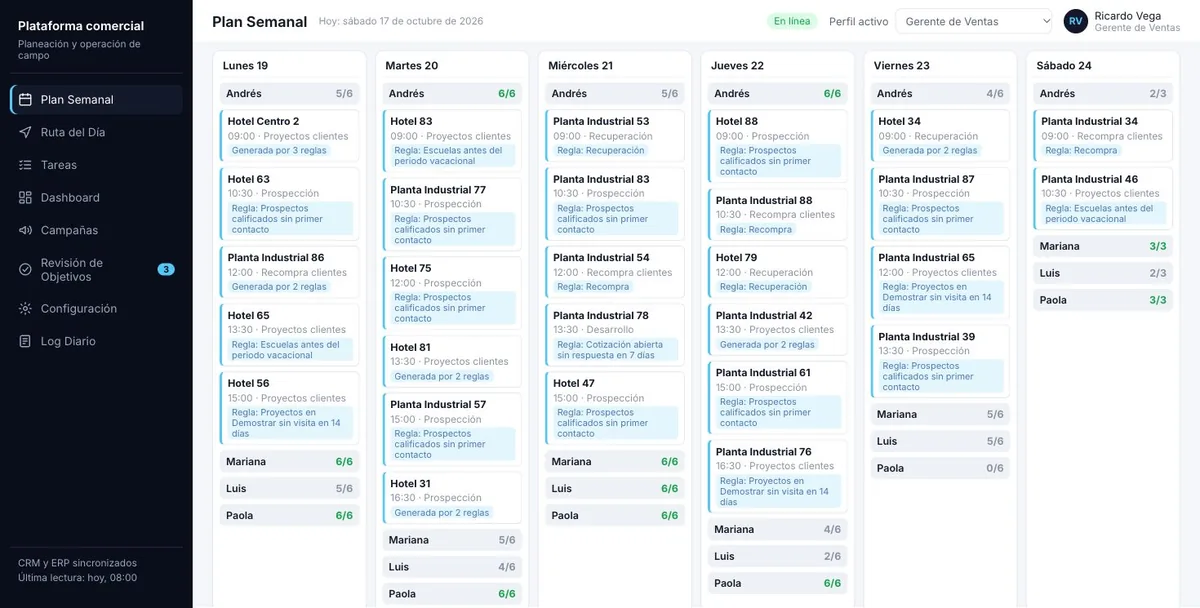
For companies with field salespeople: AI proposes the week's plan based on the CRM portfolio, the manager approves it, and each visit is recorded by voice.
What it solves
The problem
Salespeople planned visits manually and from memory. Much of the customer portfolio went without contact, what happened during each visit was not recorded, and the CRM was updated late or not at all.
What it does
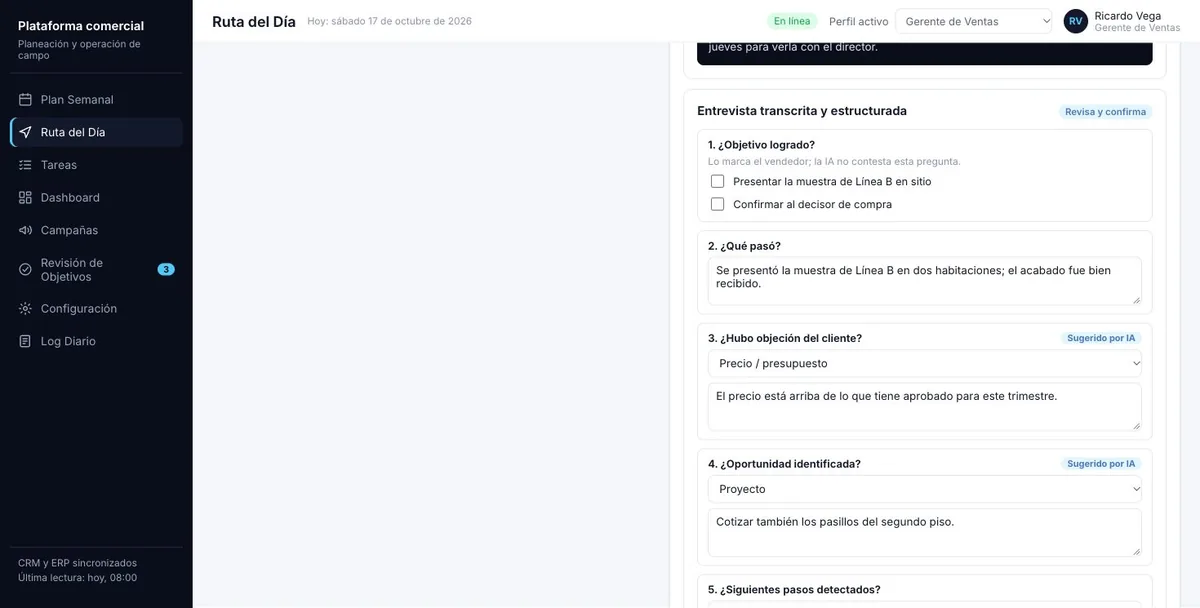
An agent layer that works with the CRM and ERP already in use. It proposes each salesperson's weekly plan using business rules and visit capacity, turns what the salesperson dictates after a visit into a structured record, suggests campaign audiences and steps, and syncs tasks and tags with the CRM. A person decides whether to approve the plan, confirm the interview, activate a campaign and validate an objective.
The result
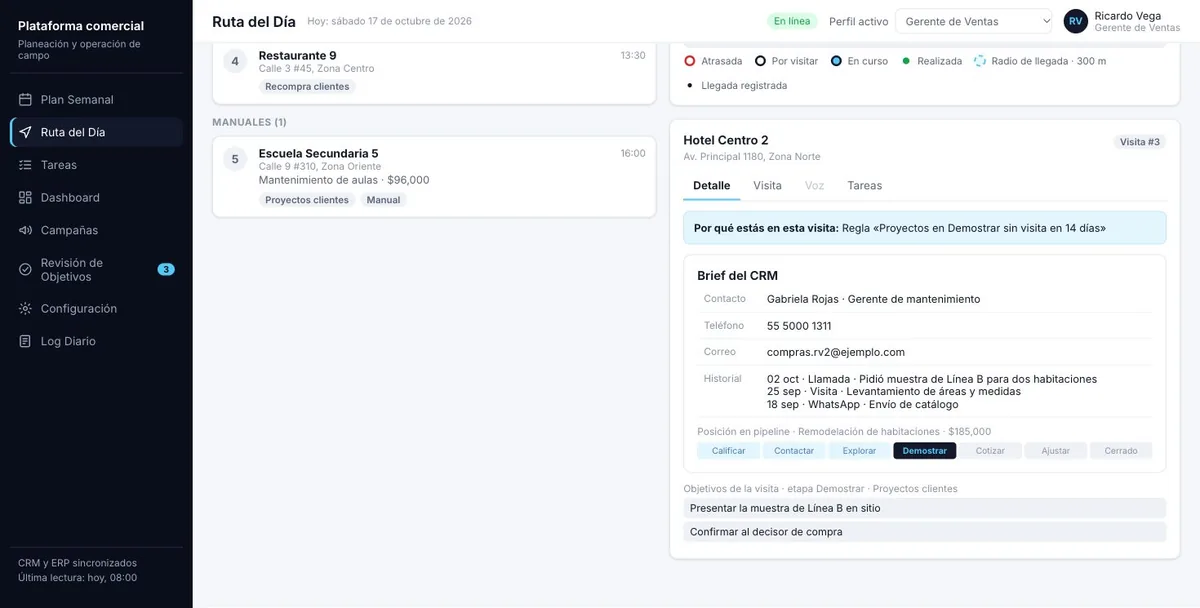
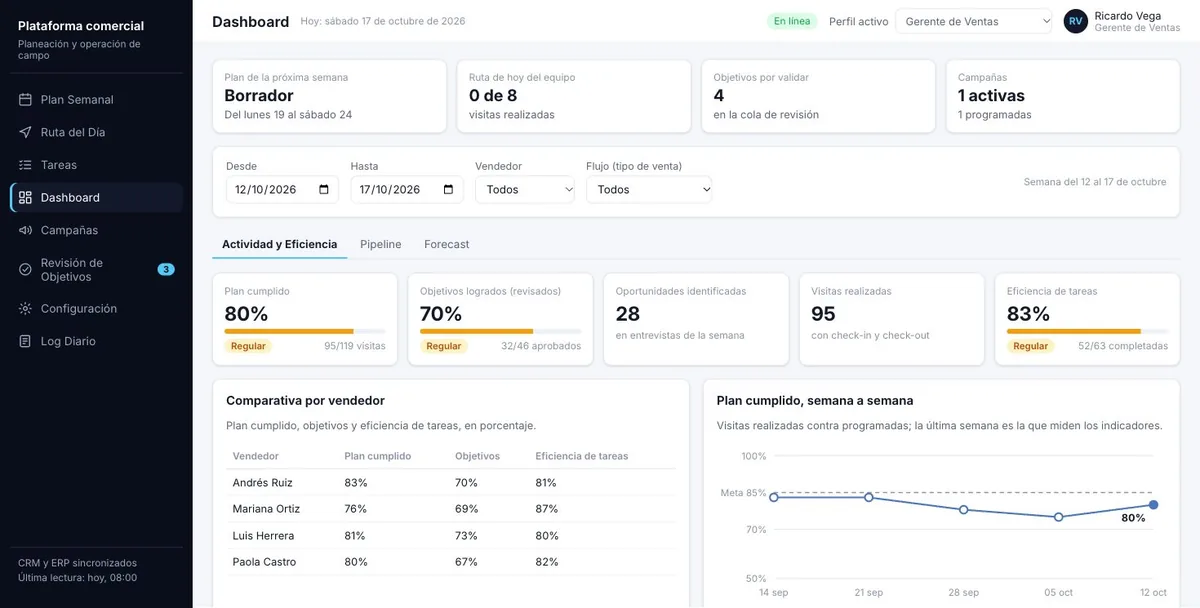
Each week has a plan explained rule by rule without exceeding anyone's capacity; each visit includes its time, location, interview and tasks, and the manager sees what was actually accomplished on a dashboard.
How it looks
Run by the system
It reads the customer portfolio and deals in the CRM, generates each salesperson's weekly plan with rules, capacity and exceptions, interprets adjustments written in plain language, transcribes and structures the voice interview, creates tasks from the visit, proposes campaign audiences and strategy, syncs tasks and tags with the CRM, and calculates the metrics.
Decided by a person
Which notes and exceptions are included in the week, whether the plan is adjusted, rejected or approved, the order in which the route is traveled, which objective was achieved and whether the proposed objection and opportunity are correct, which campaign is activated and which objective is validated or rejected.
- A week that explains itselfEach visit shows the rule that prompted it, and the allocation among salespeople is visible.
- Visits with evidenceArrival time and location, photos and a structured interview for each visit.
- Follow-up that doesn't get lostWhat comes out of a visit becomes a dated task and goes into the CRM.
- Works with what is already in placeThe CRM and ERP remain the source; the platform reads, proposes and writes with confirmation.
“This project began with a distributor whose salespeople planned visits from memory and reported them verbally.”
The customer portfolio was in the CRM, but each salesperson chose whom to visit, the manager did not know whether visits happened, and agreements with customers stayed in notebooks and chats.
What would it look like in your operation?
We review it with you in 30 minutes using your processes and systems.